Cable assemblies are often the unsung heroes behind modern technology. They ensure reliable power and signal transmission across numerous industries. But what exactly is a cable assembly, and why is it so important?
In this article, we will explore the components, types, and benefits of cable assemblies. You’ll also discover how they differ from wire harnesses and why they matter in various applications.
Introduction
Overview of Cable Assemblies
A cable assembly is a grouping of wires or cables bundled together in a single unit. These assemblies often consist of various types of cables, carefully arranged and encased in a protective sheath to enhance durability, streamline installation, and improve system reliability. Cable assemblies are typically found in complex electrical and electronic systems where efficient power and signal transmission are paramount.
Cable assemblies serve multiple purposes, from organizing and protecting cables to ensuring a secure and stable connection between different system components. Their primary function is to facilitate the smooth flow of electrical power or data through structured, organized pathways, which reduces the risk of malfunction and improves the overall performance of the system.
Why Understanding Cable Assemblies Matters
Understanding cable assemblies is essential for ensuring that your electrical and electronic systems remain reliable, efficient, and safe. With the increasing complexity of modern technology, choosing the right cable assembly can make a significant difference in terms of system performance, maintenance, and longevity. Properly designed and manufactured cable assemblies provide a strong foundation for electrical and data transmission, helping to avoid potential system failures or interruptions due to signal interference, wear and tear, or environmental challenges.
In this article, we will delve deeper into the specifics of cable assemblies, exploring their core components, types, and applications across various industries. By the end, you'll have a better understanding of how these assemblies contribute to the functionality and efficiency of complex systems.
What Exactly is a Cable Assembly?
Definition and Core Purpose
A cable assembly consists of multiple individual wires or cables that are grouped together in a single protective sleeve or sheath. This grouping is typically done using cable ties, tapes, or molded covers to ensure that the cables remain organized and easy to manage. The purpose of a cable assembly is to transmit power, data, or signals efficiently between different components of an electrical or electronic system while maintaining safety and performance.
Cable assemblies are designed to streamline the installation and maintenance process, reduce clutter, and provide a reliable connection between different devices. They are used in various applications, including power distribution systems, communication networks, automotive systems, medical devices, and more. Depending on the specific application, cable assemblies can be customized to meet the required specifications, such as cable type, length, environmental resistance, and connector configurations.
Components of a Cable Assembly
A cable assembly is composed of several essential components, each playing a critical role in ensuring the assembly performs as intended. The primary components include:
● Conductors: These are the wires or cables that carry the electrical current or signals. Typically made from copper or aluminum, conductors are chosen for their excellent electrical conductivity and durability.
● Insulators: These materials surround the conductors and prevent electrical short circuits by keeping the conductors separated. Insulation also helps to protect the wires from external elements such as moisture, heat, and chemicals. Common insulation materials include PVC, Teflon, and rubber.
● Connectors: These are the components that allow cables to interface with other system elements. Connectors are designed to securely attach cables to devices, ensuring a stable and reliable connection. They may vary depending on the application, with options such as coaxial connectors, D-sub connectors, or USB connectors.
● Protective Sheath: The outer layer of the cable assembly provides additional protection to the internal components. This sheath shields the conductors from mechanical stress, environmental factors, and wear and tear. Sheaths are typically made from durable materials like thermoplastic or polyurethane.
By combining these components, cable assemblies are able to deliver reliable power and signal transmission while ensuring the safety and longevity of the entire system.
Types of Cable Assemblies
Cable assemblies come in various types, each designed to serve different purposes and meet specific environmental requirements. Below are some of the most common types of cable assemblies:
Coaxial Cable Assemblies
Coaxial cable assemblies are designed to transmit high-frequency signals, often used in applications like television, internet, and satellite communications. These assemblies typically consist of a central conductor, an insulating layer, a shield (often made of braided copper or aluminum), and an outer protective jacket. Coaxial cable assemblies are known for their excellent shielding properties, which help to minimize signal interference and maintain signal integrity over long distances.
USB Cable Assemblies
Universal Serial Bus (USB) cable assemblies are widely used for data transfer and charging applications. These assemblies can vary in speed (e.g., USB 2.0, USB 3.0, or USB-C) and are commonly found in consumer electronics, such as smartphones, laptops, and gaming consoles. USB cable assemblies provide a versatile and cost-effective solution for connecting various devices, offering both power and data transmission capabilities.
Power Cable Assemblies
Power cable assemblies are designed to handle high electrical currents and deliver power to various systems or devices. These assemblies are often used in industrial applications, such as machinery, power distribution systems, and automotive applications. Power cable assemblies feature thick insulation and robust connectors to ensure safe and efficient power delivery in demanding environments.
LED and Lighting Cable Assemblies
LED and lighting cable assemblies are specifically designed for use in lighting systems, providing the necessary power to LEDs and ensuring reliable operation. These assemblies are often used in applications such as architectural lighting, automotive lighting, and commercial lighting. LED cable assemblies feature flexible, durable construction, making them ideal for environments where space optimization and ease of installation are important.
Cable Assemblies vs. Wire Harnesses: Key Differences
While cable assemblies and wire harnesses may seem similar, they have distinct differences in terms of construction, protection, and applications.
Structure and Durability Comparison
Cable assemblies are generally more robust than wire harnesses, offering superior protection to the internal wires. Cable assemblies typically include a protective sheath that encases the conductors, shielding them from external elements such as moisture, heat, and physical stress. In contrast, wire harnesses are often simpler, with individual wires grouped together without a protective outer sheath.
The added protection in cable assemblies makes them suitable for harsh environments, such as outdoor installations, industrial machinery, and military applications. Wire harnesses, on the other hand, are often used in less demanding environments where flexibility and ease of separation are more important.
Applications and Suitability
Cable assemblies are typically used in applications where durability and protection are critical. These include power distribution systems, telecommunications, automotive systems, and medical devices. Wire harnesses are more commonly found in applications where flexibility, ease of installation, and organization are the main priorities. They are often used in consumer electronics, household appliances, and less rugged industrial environments.
Flexibility vs. Protection: Which One is Right for You?
When choosing between a cable assembly and a wire harness, it's important to consider the specific needs of your application. If your system requires high durability and resistance to harsh conditions, cable assemblies are the better choice. However, if your system demands flexibility, ease of separation, and cost-effectiveness, a wire harness may be more suitable.
Feature | Cable Assembly | Wire Harness |
Protection | Enclosed in protective sheath, offering superior protection. | Individual wires grouped without full protection. |
Flexibility | Less flexible but more protective, designed for harsh conditions. | More flexible, ideal for easy separation. |
Durability | Highly durable, ideal for demanding environments. | Less durable, best for indoor applications. |
Customization | Fully customizable for specific needs. | Can be customized but less protective than cable assemblies. |
Application Suitability | Best for outdoor, industrial, and high-performance settings. | Better for low-stress environments requiring flexibility. |
Benefits of Cable Assemblies in Electrical Systems
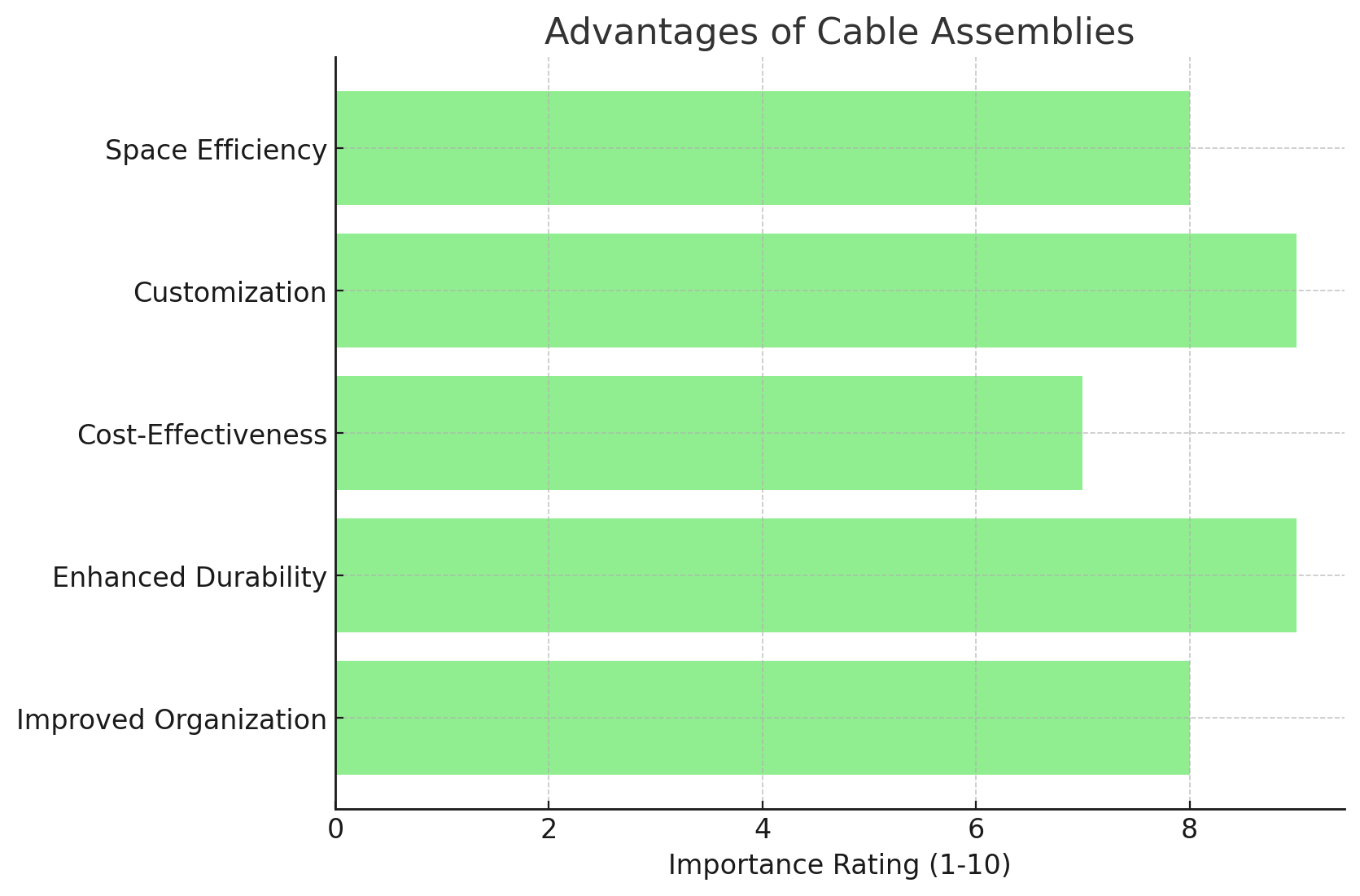
Cable assemblies offer several key advantages that contribute to the overall efficiency, safety, and reliability of electrical systems.
Organized and Efficient Wiring
One of the primary benefits of cable assemblies is their ability to organize multiple wires into a single, compact unit. This organization simplifies the installation process, reduces clutter, and makes maintenance easier. By grouping cables together, cable assemblies help to eliminate the confusion of managing individual wires and provide a clear and structured wiring solution.
Durability and Long-Term Performance
Cable assemblies are designed to withstand environmental challenges such as extreme temperatures, moisture, vibrations, and mechanical stress. This durability ensures that the cables within the assembly remain functional over time, reducing the need for frequent replacements and minimizing system downtime. Custom cable assemblies can be tailored to meet the specific environmental conditions of your application, ensuring long-term performance and reliability.
Cost-Effectiveness in the Long Run
While cable assemblies may have a higher upfront cost compared to individual cables or wire harnesses, they offer significant long-term cost savings. The enhanced durability and protection provided by cable assemblies reduce the need for repairs or replacements, making them a more cost-effective solution over time. Additionally, the simplified installation and maintenance processes can save time and labor costs.
Applications of Cable Assemblies Across Industries
Cable assemblies are used in a wide range of industries, each requiring specific characteristics and performance standards. Below are some of the key sectors where cable assemblies play a vital role:
Automotive Industry
In the automotive industry, cable assemblies are crucial for the proper functioning of electrical systems, from engine control and power distribution to safety systems and infotainment. The rugged construction of cable assemblies ensures they can withstand the harsh conditions found in vehicles, including high temperatures, vibrations, and exposure to moisture.
Aerospace and Defense
Cable assemblies are essential in aerospace and defense applications, where reliability and durability are critical. These assemblies are used in communication systems, radar systems, and flight control systems, where they must operate flawlessly in extreme conditions such as high altitudes, temperature fluctuations, and exposure to electromagnetic interference.
Telecommunications and Data Centers
In telecommunications and data centers, cable assemblies ensure reliable and efficient data transmission across complex networks. Fiber optic cable assemblies, for example, are used to provide high-speed data transfer over long distances, while coaxial and power cable assemblies deliver the necessary power to network equipment.
Medical Devices
Cable assemblies are also used in medical devices, where precision and safety are paramount. These assemblies are designed to meet strict standards for reliability and durability, ensuring that critical medical equipment, such as patient monitoring systems and imaging devices, operates efficiently and safely.
Custom Cable Assemblies: Tailoring to Specific Needs
Benefits of Customization
Custom cable assemblies offer several advantages, including the ability to meet specific performance requirements, fit within tight spaces, and handle unique environmental challenges. By working with a manufacturer to design a custom cable assembly, you can ensure that your system operates at its full potential, with the right cables, connectors, and protective features.
The Manufacturing Process
The process of designing and manufacturing a custom cable assembly involves several steps, including requirement analysis, material selection, prototype development, testing, and final production. Engineers work closely with clients to determine the specific needs of the application, ensuring that the assembly meets all necessary performance, durability, and environmental standards.
Quality Control and Testing
Quality control is a critical aspect of the cable assembly manufacturing process. Custom cable assemblies undergo rigorous testing to ensure they meet performance standards and can withstand the conditions of their intended application. Tests may include electrical, mechanical, and environmental assessments to verify the assembly's functionality and durability.
Conclusion
Cable assemblies are vital in modern electrical systems, offering efficient power and signal transmission. By consolidating multiple wires into a single unit, they simplify installation and improve system performance. As technology evolves, cable assemblies are becoming more durable, sustainable, and high-performing. Companies like TOTEK offer advanced cable assembly solutions that enhance system reliability and meet evolving technological needs, ensuring long-term value across industries.
FAQ
Q: What is a cable assembly?
A: A cable assembly is a collection of wires or cables grouped together within a protective sheath, designed to transmit power or signals efficiently and safely across systems.
Q: How does a cable assembly improve system performance?
A: A cable assembly organizes multiple cables into a single unit, simplifying installation, reducing clutter, and enhancing reliability in electrical systems.
Q: Why are cable assemblies used in industrial applications?
A: Cable assemblies provide superior protection and durability in industrial settings, ensuring reliable power and signal transmission under harsh conditions.
Q: What are the advantages of using a custom cable assembly?
A: Custom cable assemblies offer tailored solutions for specific applications, ensuring optimal performance, flexibility, and longevity in demanding environments.
Q: How do cable assemblies differ from wire harnesses?
A: Cable assemblies are more durable, offering superior protection, while wire harnesses are designed for easier separation and flexibility within less demanding environments.
Q: Are cable assemblies cost-effective?
A: Yes, cable assemblies can save long-term costs by reducing maintenance needs, minimizing downtime, and providing durable solutions that last longer.


